
Service Suspension System warning: causes and fixes
For GM trucks, SUVs, and cars with MagneRide or AutoRide: what the warning means, the codes behind it, and how to clear it for good.
Written by M&P USA, the veteran-owned company that designs, builds, and supports these kits in the USA.
The Service Suspension System warning on a GM truck, SUV, or car means the suspension module has found a fault in a shock, strut, or ride height sensor circuit. This guide explains what triggers it, which codes to look for, how to fix it, and what to check if the warning won’t clear.
The short answer
- It means the suspension module sees a fault in a shock, strut, or ride height sensor circuit, and on many GM vehicles it also limits top speed.
- The usual cause is a worn or leaking MagneRide or AutoRide shock, or factory shocks replaced with standard ones.
- The fix is either new factory parts or a plug-in bypass that gives the module the signals it expects.
- Codes still there after a bypass? Work through the checklist below; it covers nearly every case we see.
What the warning means
GM trucks, SUVs, and cars with MagneRide or AutoRide have a suspension control module that checks the electrical circuit at every electronic shock or strut, and on trucks and SUVs, the signal from every ride height sensor. When one of those circuits looks wrong, the module stores a trouble code and shows the Service Suspension System message.
Depending on the model, you may also see “Service Ride Control” or “Shocks Inoperative,” and a “Speed Limited” message. Customers report the limit at around 80 to 85 mph. Other warnings, such as StabiliTrak or traction control, can appear at the same time.
Before you buy parts, enter your VIN in the NHTSA recall lookup to check for open safety recalls; recall repairs are free at a dealer.
Common causes
- A worn or leaking shock. An oily film on the shock body, or a harsh or floaty ride, usually means an internal failure.
- Factory shocks replaced with standard shocks or coilovers without a bypass. The module sees an open circuit where the electronic shock used to be.
- A ride height sensor problem on trucks and SUVs: a failed sensor, a broken link, or a lift or lowering kit that moved the sensor out of range.
- Wiring or connector damage: corrosion, a broken wire, or a connector that isn’t fully clicked in.
- Rear air leveling faults on some SUVs: a leaking air sleeve or a compressor that runs too long.
Trouble codes you may see
A scan tool that reads chassis (C) codes shows exactly which circuit the module doesn’t like. On many GM trucks and SUVs of this era, common examples include:
| Code range | What it usually points to |
|---|---|
| C0575, C0580, C0585, C0590 | A shock or strut actuator circuit at one corner |
| C0615, C0620, C0625, C0630 | A ride height (position) sensor circuit at one corner |
Exact codes and their meanings vary by model and year, so have the full code list read. If you see ABS, brake, or traction codes too, check those systems separately; one Escalade owner’s ABS code turned out to be a bad brake switch, not the suspension.
How to fix it
Option 1: new factory parts
Replacing the failed shocks or sensors with new GM parts keeps the factory adjustable ride. On many trucks and SUVs that costs $1,500 to $3,800 or more before labor.
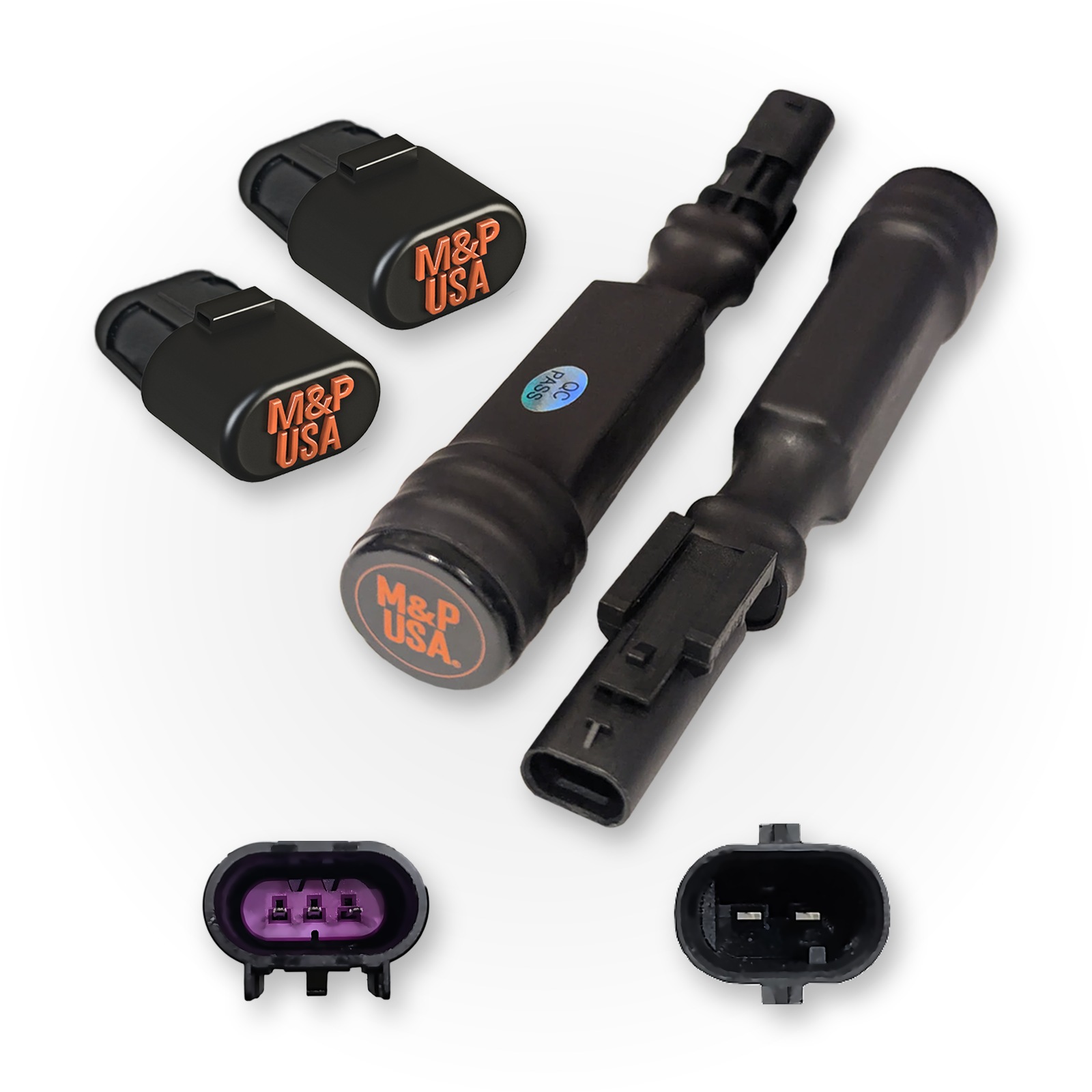
Option 2: a plug-in bypass
Install standard shocks or coilovers, then plug simulators into the factory connectors so the module sees a normal system. Trucks and SUVs need shock simulators and ride height simulators; cars at stock ride height need only shock simulators. Not sure which kit fits? Use Find My Kit, or see our guides for Z55, Z95, 2021-2023 SUVs, and cars. To weigh the options, read the best MagneRide bypass kit comparison.
Codes that won’t clear: a checklist
If the Service Suspension System message is still there after installing a bypass, check these in order:
- Clear the stored codes. Codes can stay stored after the fault is fixed. Clear them with a scan tool, wait up to 40 ignition cycles, or disconnect the battery for at least 30 minutes.
- Ride height simulators on trucks and SUVs. A shock-only kit on a truck or SUV leaves the ride height circuits unhandled, and the warning comes back.
- Every connector clicked in. Check each simulator and factory plug for a full click, and look for corrosion or bent pins.
- The right kit for your year. 2013-2014 trucks and SUVs can be Z55 or Z95 (check the glove box label), and 2021-2023 SUVs need the 2021-2023 kit even though their label says Z95.
- Z55 rear connectors. On 2005-2012 Z55 trucks and SUVs, the rear needs the pigtail adapter set.
- C6 Corvette and XLR rear. Remove the small center tab on the simulator’s connector so the rear plug seats fully.
- Ride Height Trim. Required on GMC Denali models and recommended on all others; any shop with a scan tool can do it in a few minutes.
- Heat damage. A simulator mounted near the exhaust can melt. Mount every part to a metal surface away from heat; our lifetime warranty covers a replacement.
- Other systems. If StabiliTrak, ABS, or traction codes remain, have them diagnosed separately.
Still stuck? Contact us with your year, make, model, and the codes, and a real person will help.
Compressor or rear air problems after a delete
- 2015-2020 Z95 trucks and SUVs switching to non-air rear shocks: connect the rear air lines to each other so the compressor does not run constantly. See our Z95 guide.
- 2005-2012 Z55 trucks and SUVs switching to non-air rear shocks: you can generally pull the compressor fuse or relay once the bypass is installed, and leave the compressor plugged in. See our Z55 guide.
- Keeping rear air shocks? Leave the rear ride height sensors connected so automatic leveling keeps working.
Frequently asked questions
What does Service Suspension System mean?
The suspension control module has found a fault in a shock, strut, or ride height sensor circuit. On many GM vehicles it also limits top speed until the fault is fixed and the codes are cleared.
Is it safe to drive with the Service Suspension System message?
Many owners drive carefully to a shop, but the ride and handling can be worse and the speed may be limited. Have it checked soon, especially if a shock is leaking.
Will a bypass clear the Service Suspension System warning?
Yes, when the kit covers every unplugged shock connector and, on trucks and SUVs, the ride height sensor connectors too, and the stored codes are cleared.
Why did the warning come back after installing a bypass?
The usual reasons are stored codes that weren’t cleared, a truck or SUV without ride height simulators, a connector that isn’t fully clicked in, the wrong kit for the model year, or Z55 rear connectors without pigtails.
How do I clear the codes?
Use a scan tool, drive through up to 40 ignition cycles, or disconnect the battery for at least 30 minutes.
Will the speed limit go away?
Yes. Once the module sees a normal system and the codes clear, the speed limit goes away.
Still not sure which kit fits?
Enter your year, make, and model in our Find My Kit tool, or send us your VIN and a real person will confirm the right kit before you order.
MagneRide® is a registered trademark of BWI Group. Other names are used only to identify compatible vehicles. M&P USA is not affiliated with, endorsed by, or sponsored by BWI Group or General Motors. Prices shown are approximate.